
How to Get Into Acting in Scotland: A Beginner’s Guide

How to Get Into Acting in Scotland: A Beginner’s Guide
So you want to become an actor.
Perhaps you have been thinking about it for years. Perhaps you have recently joined a drama group and discovered that standing on a stage feels strangely natural. Or perhaps you have spent too many evenings watching television and thinking, "I could do that."
The good news is that there is no single route into acting in Scotland.
Some actors go to drama school. Others start with community theatre, student productions or short films. Some build experience gradually alongside another job. Others train formally before looking for agents and professional work.
There is no magic door that opens and reveals a career on the other side.
Instead, acting tends to be a series of small steps: learning your craft, meeting people, getting auditions, dealing with rejection, building experience and gradually creating the materials that allow casting directors to see what you can do.
Scotland has a particularly interesting place within the wider UK acting industry. Glasgow and Edinburgh have established theatre and screen communities, while the Royal Conservatoire of Scotland provides a well-known route into professional actor training.
For someone starting from scratch, however, the sheer number of choices can make the whole thing feel more complicated than it needs to be.
So where should you actually begin?
Do You Need Drama School to Become an Actor in Scotland?
No. Drama school is one route into acting, but it is not the only route.
Formal actor training can provide structured development, performance experience, professional contacts and an introduction to the industry. For some aspiring actors, it will be exactly the right environment.
For others, a different route can work just as well.
Acting Classes and Workshops
Acting classes and workshops can help beginners develop their technique while gaining confidence in front of other people.
They can also help you understand what type of acting you enjoy, whether that is theatre, television, film or something else.
Community Theatre
Community theatre is another practical way to get started.
It can give new actors experience of rehearsals, scripts, character development, working with a director and performing alongside other actors.
It may not feel like the glamorous side of the industry, but those early experiences can be enormously useful.
The important thing is to start doing the work rather than waiting until you feel completely ready.
How to Get Into Acting With No Experience
One of the most common questions beginners ask is:
How do I get into acting with no experience?
The answer is to start collecting experience.
That could mean joining a local drama group, taking an acting class, appearing in a student film, auditioning for a small production or getting involved in a short film project.
Your first experience does not have to be glamorous.
It simply needs to be a beginning.
Your First Acting Opportunities
Look for opportunities where you can learn.
A small theatre production can teach you things that are difficult to pick up in a classroom. You begin to understand rehearsals, blocking, character development, taking direction and the practical demands of performing.
You also discover what you are actually like in a room with other actors.
Can you listen? Can you adapt? Can you take direction? Can you stay focused when something goes wrong?
These are the qualities that gradually become part of your professional reputation.
And reputation matters.
Scotland's acting community is connected to the wider UK industry, but it is also made up of relationships between performers, directors, casting professionals, theatre companies and other creatives.
One opportunity can sometimes lead to another.

The Royal Conservatoire of Scotland and Actor Training
For many aspiring Scottish actors, the Royal Conservatoire of Scotland, often referred to as RCS, is one of the first names they encounter when researching professional actor training.
RCS offers a formal route into acting, but getting into drama school is not a prerequisite for becoming an actor.
Do You Have to Go to Drama School?
No.
A professional acting career can develop through different combinations of training, experience and opportunity.
One actor might attend drama school. Another might take classes while working and build experience through theatre and screen projects. Someone else might begin acting later in life after working in another career.
There is no universal timetable.
The more important question is whether you are continuing to develop your skills and gaining experience.
Is 25 Too Old to Start Acting?
For many people considering a career change, the question is not "Can I become an actor?" but "Am I too old to start?"
Twenty-five is certainly not too old to begin acting.
The same applies to people discovering acting in their thirties, forties or beyond.
Actors are needed to portray people of different ages, backgrounds and life experiences. Someone who starts later may bring experiences to the work that a younger performer simply has not had yet.
Starting Acting as an Adult
Starting later can also mean approaching the profession with greater self-awareness.
You may already have experience of work, relationships, family life, pressure, responsibility and the ordinary situations that inform believable characters.
You do not need to become somebody else's idea of what an actor looks or sounds like.
Casting is about finding the right person for a particular role.
That is one reason authenticity matters so much.
When Should You Join Spotlight?
Spotlight is an important part of the UK casting industry and is something many actors encounter as they move towards professional work.
However, there is little benefit in believing that you need to have everything in place immediately.
A new actor does not necessarily need an extensive showreel, agent, long list of credits and perfectly polished professional profile before taking the first steps.
Build your materials as your experience develops.
Your casting profile should represent where you are now, not the actor you hope to become five years from now.
That includes your headshot.
For a beginner, authenticity is more useful than trying to look like a stereotypical "actor".
Why Actor Headshots Matter
Your headshot is often one of the first things a casting professional sees.
That makes it an important part of your professional presentation.
A good actor headshot is not simply a nice portrait. It needs to represent you accurately and work within the context of casting.
Why Should an Actor Headshot Look Like You?
This is where actor headshots differ from many other types of photography.
The goal is not necessarily to create the most glamorous version of yourself.
It is to create a believable photograph that gives a casting professional a clear impression of the person they may be considering for a role.
That means avoiding excessive retouching, unnecessary styling and photographs that look completely different from the person who walks into the audition room.
You can read more about why casting directors want a headshot that looks like you.
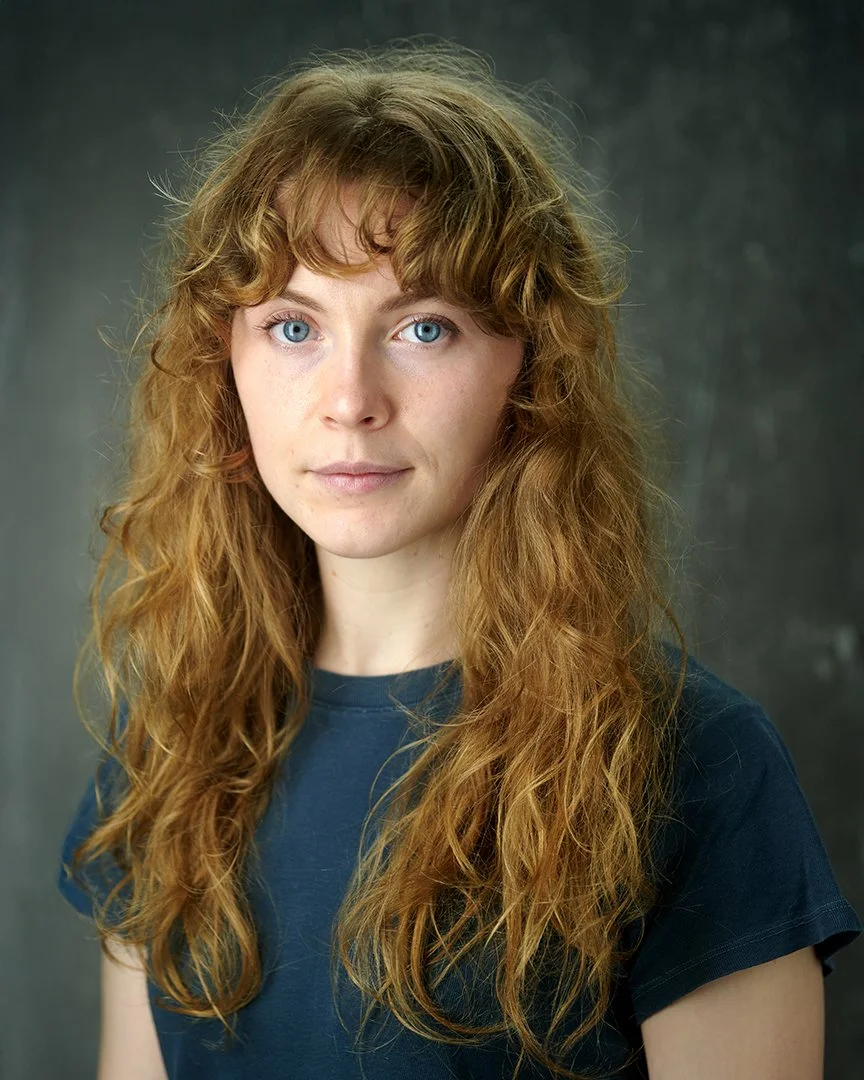
Headshots for Scottish Casting
If you are an actor in Scotland, your headshot should work in the context of the Scottish casting industry rather than looking like a generic studio portrait.
For actors in Glasgow, Edinburgh and elsewhere in Scotland, that means thinking carefully about how your image represents you for theatre, television and film opportunities.
You can read more about headshots made for Scottish casting.
When Should You Get Professional Actor Headshots?
There is little point in booking professional headshots simply because you have decided that you would like to be an actor one day.
But once you are actively pursuing acting, auditioning and building a professional casting profile, a good headshot becomes part of your basic toolkit.
It can be used for casting profiles, applications and other professional materials.
What Should a Beginner's Actor Headshot Look Like?
For a new actor, one strong and natural image is usually more useful than a collection of heavily styled photographs.
The photograph should look like you on a good day.
It should also make sense for the kinds of roles you could realistically be considered for.
Before booking your first session, it is worth understanding what a first headshot session costs and what is included in the price.
What Else Do You Need to Become an Actor?
Actor headshots are only one part of building your professional profile.
As you progress, several other elements become increasingly important.
Self-Tapes and Acting Auditions
Self-tape auditions have become an important part of modern casting.
Being able to read a brief, prepare a scene, learn your lines and record a clear performance is a useful skill for actors at every stage.
The equipment does not need to be complicated.
The acting does.
Learning how to prepare and record a strong self-tape is therefore worth treating as part of your development.
Building an Acting Showreel
A showreel gives casting professionals a chance to see you acting rather than simply looking at your photograph.
For beginners, this creates an obvious problem: how do you make a showreel when you do not yet have much professional footage?
The answer is to build it gradually.
Student films, short films, theatre recordings and other relevant work can become useful material as your experience develops.
The emphasis should be on quality and relevance rather than simply collecting as much footage as possible.
Do You Need an Agent to Become an Actor?
An agent can become an important part of an acting career, particularly as the level and type of work changes.
But finding an agent is not necessarily the first thing a complete beginner needs to solve.
A stronger foundation is to develop your acting skills, gain experience and create professional materials first.
Then you have something meaningful to show.
How to Start Acting in Scotland: A Practical First-Year Plan
Rather than thinking about "becoming an actor" as one enormous task, break the process into smaller steps.
First Three Months: Start Learning
Take an acting class, attend workshops or get involved with a local theatre project.
The aim is to begin developing your skills and understanding how acting actually works.
Months Three to Six: Build Experience
Look for opportunities to perform.
Audition for community theatre. Explore student films and short films. Start becoming comfortable with the audition process.
The objective is not to build an impressive CV overnight.
It is to become a more experienced actor.
Months Six to Twelve: Build Your Professional Profile
As you become more serious about pursuing professional work, start putting your professional materials together.
That could include:
A casting profile.
A strong actor CV.
Professional headshots.
Self-tape experience.
Showreel material.
Information about appropriate casting platforms and representation.
There is no requirement to have all of these immediately. Build them as your experience grows.
What Is the Best Way to Start an Acting Career in Scotland?
There is no secret route into acting.
There is no single qualification that guarantees a career.
And there is no fixed age at which you have to start.
The practical approach is to begin learning, gain experience, meet other people working in the industry and gradually build the materials you need to present yourself professionally.
Take a class.
Join a production.
Audition.
Learn how self-tapes work.
Research Spotlight when the time is right.
Build your experience.
And when you are ready to present yourself professionally, make sure your headshot genuinely represents you.
Scotland has a strong and connected theatre and screen community, but getting into acting is rarely about one dramatic breakthrough.
It is usually about taking the next useful step.
Then taking another.
And eventually, those steps begin to look like a career.
Frequently Asked Questions About Getting Into Acting in Scotland
How do I get into acting with no experience?
Start by taking acting classes, joining community theatre, auditioning for smaller productions and looking for opportunities to build practical experience. You do not need a long list of professional credits before you begin.
Do I need to go to drama school to become an actor?
No. Drama school is one route into the profession, but actors also enter through acting classes, community theatre, short films, workshops and other forms of training and experience.
Is 25 too old to start acting?
No. Actors begin their careers at many different ages. Starting at 25 can provide valuable life and work experience that can inform your performances.
When should I get actor headshots?
Once you are actively pursuing acting and need professional casting materials, a good actor headshot becomes an important part of your profile.
What makes a good actor headshot?
A good actor headshot should look like you, be recognisable and accurately represent the person a casting professional would meet in an audition. It should be suitable for the kinds of roles you are realistically pursuing.
Do I need Spotlight to become an actor?
Spotlight can become an important part of professional casting in the UK, but beginners do not need to solve every part of their acting career at once. Build your skills and experience first, then develop your professional casting materials as your career progresses.
Can I become an actor without professional experience?
You have to start somewhere. Community theatre, acting classes, student films, workshops and smaller productions can all help you develop the experience needed to progress towards professional opportunities.